Thursday, 18 July 2013

Puppy Love??


Judge ordered to return dachshund to neighbour

A top judge in Swaziland has been ordered to return a dachshund puppy to its owner after he became embroiled in a messy custody battle.

The magistrates court in the capital Mbabane ordered Judge Jacobus Annandale to return the sausage dog to his neighbour Bhekiwe Dlamini, after he had it seized from her a week ago.
Justice Annandale, an avid dog-breeder, had sold the long-bodied pup to Ms Dlamini but later accused her of abusing it and sent police officers with a fake court order to take it back.
Magistrate Ndumiso Shongwe overturned the interim order obtained by Justice Annandale and dismissed the case.
The court also dismissed the judge's claim that Ms Dlamini had failed to take care of the dog, and made it sleep in the fly-infested cold.
In his ruling, the magistrate said there had been no conditions attached to the agreement of sale between the two parties.

Wednesday, 17 July 2013

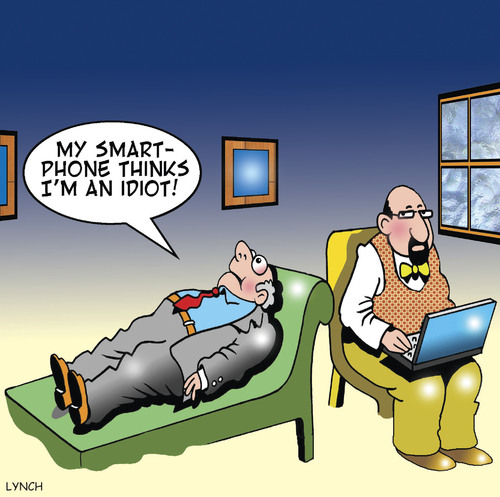
Smarty Pants??


Who Is Who in Smartphone Sector

According to the recent statistics, Apple’s overly hyped iPhone is slowly dying and may soon fall behind Microsoft. Indeed, the excessive growth which has characterized Apple sales in the smartphone sector has recently slowed and the company now has only 19% of the market. Some industry observers put this market share figure in perspective and pointed out that the company is currently one point ahead of the much maligned Microsoft.

In the meanwhile, the winner now is Android, dominating the mobile market and making up almost 60% of those shipments. However, Microsoft has patent which Android uses, and therefore makes $8 out of each phone sold, so it is winning in this situation as well.

As for the top manufacture, the first place is taken by Samsung, which grew its volume by 64% annually. Apple takes the second place and is followed by Huawei, LG and ZTE. However, those make up less than 5% of the market share.

The industry experts wonder how Apple not only dropped the ball, but gift wrapped it and gave it to its rivals. One answer is that this wouldn’t be happening if Steve Jobs were alive, but saner appeals suggest that the company simply fears to modify Jobs’ vision. Some experts claim that the iPhone user interface is already 6 years old and needs an urgent refresh. In addition, Apple keeps ignoring the trend for larger displays in premium smartphones.

In the meanwhile, Apple can’t claim that the market is saturated, as global shipments for notebooks, tablets and smartphones were over 308 million in the first quarter of the current year, which represents 37% growth from the same quarter of 2012. The statistics shows that tablets are the fastest growing among the three markets, growing 106% year-over-year to 41.9 million units. Here Apple is still the leader, holding a 46% market share, but it has lost the level of dominance it once enjoyed.

Tuesday, 16 July 2013

Behind Closed Curtains??


Porn Studios Threaten to Call Neighbours of File-Sharers

Apparently, copyright trolls are using quite threatening language in their attempts to convince defendants to settle. Recently, the Prenda Law reincarnation “Anti-Piracy Law Group” sent letters to people accused of pirating porn content, threatening them to inform neighbours about their illegal activities and inspect their work machines.

Such copyright troll lawsuits, involving up to tens of thousands of alleged pirates became very widespread in the past few years, because people tend to settle due to the embarrassing nature of the case. The cases are all alike: a number of IP addresses are accused of “stealing” copyrighted content with the trolls requesting a subpoena from the court to make ISPs disclose the identities of account holders. Finally, they then contact the defendants and offer to settle for a reasonable amount, threatening to name them in the lawsuit otherwise.

While many courts today refuse such cases, there are still judges who sign off on them. Sometimes related, the copyright trolls go crazy: the letters sent by the “Anti-Piracy Law Group”, former Prenda Law, represent a bright example of a new low.

It was the LW Systems v. Christopher Hubbard case where the defendant received a letter from the law firm representing a porn studio. The letter was sent after the defendant ignored the first settlement offer. It was obvious that the case dealt with embarrassing porn material, but the defendant was also threatened that his family members and even the neighbours will be told about his “alleged perverse download habits”.

Moreover, the law firm made it sound like it was doing the defendant a favor and claimed that it wanted to inform the others to make sure that it was targeting the right individual. Nevertheless, another copyright troll Steve “Lightspeed” Jones revealed the true motivation of such moves years ago, saying that normally people aren’t embarrassed to tell their neighbours that they have downloaded some new music. However, things are different with trading midget, tranny, facials, and teen porn video – this is something worth keeping from the family and neighbours. This could be continued to compare this to the Recording Industry Association of America.

Monday, 15 July 2013

Heart Stopping!!


iPads Might Be Dangerous for the Faint-Hearted

Apple customers with heart conditions could find out that taking their iPads to bed with them may have consequences. The matter is that tiny magnets within the iPad cover can shut off implanted defibrillators on a pacemaker if you leave the device on your chest. The same may happen if you fall asleep with the iPad lying on you.
Of course, it doesn’t seem likely as a death scenario, but it is quite surprising that the geniuses at Apple didn’t think about people with heart conditions. Actually, even a 14-year-old girl could spot this, and she did. Gianna Chien made the discovery as part of her science fair project. However, her project didn’t get first place, maybe because the judges thought that Apple was perfect and iPads can’t harm anyone. But Chien will soon again be presenting her findings to 8,000 doctors at a meeting of the Heart Rhythm Society in Denver. Hopefully, she will find a more reasonable audience there.

The girl says that if you fall asleep with the iPad2 on your chest, the magnets in the cover can “accidentally turn off” the heart device. Since her dad is a doctor, she believes that it’s pretty important that people know this. Her study found that 30% of patients with defibrillators who put Apple devices on their chest were affected by iPads. Although most defibrillators can turn back on after the magnet is removed, some of them must be reactivated manually, which may causes a life-threatening situation.

According to John Day, head of heart-rhythm services at Intermountain Medical Center in Murray, Utah, and chairman of the panel responsible for reviewing scientific papers which will be presented at the Denver meeting, Gianna Chien’s research offers a valuable warning for patients with implanted defibrillators that deliver an electric shock to restart a stopped heart.

Sunday, 14 July 2013

Hacked Off!!


7 Hackers & A Great Bank Robbery


The US prosecutors announced that a cybercrime ring managed to steal $45 million from a couple of Middle Eastern banks in one of the largest bank robberies ever. The group coped with hacking into credit card processing companies and withdrawing money from ATMs in more than two dozen countries.
8 individuals were alleged to form the NY-based cell of the group, 7 of which are already in custody, while the 8th, allegedly a leader of the gang, was reported to have been murdered in the Dominican Republic this past April.

According to the prosecutors, the ringleaders were outside the US, but the investigation is still continuing. Anyway, it seems that the crooks somehow managed to do some serious damage in short time. For instance, during one of the 10-hours attacks, they raided $40 million from ATMs in two dozen countries through 36,000 transactions.

It turned out that the cybercrime group used laptops and the worldwide web instead of guns and masks. The outfit managed to work its way from the computer systems of large companies to the streets of New York City. Thus, you can see how cybercrime poses a huge threat to the international banks and how tech-savvy criminal gangs are now.

So, within the last 5 months, the collective hacked into the computers of a couple of credit card processors – one in India and the other in the US. They then increased the available balance and withdrawal limits on prepaid MasterCard debit cards issued by banks of Oman and the United Arab Emirates. Finally, they distributed counterfeit debit cards to their people across the globe, enabling them to extract millions of dollars out of ATMs in a matter of hours.

In the meanwhile, MasterCard announced that it did cooperate with law enforcement in the investigation but its systems weren’t involved or compromised. Experts believe that the robbers targeted Middle Eastern banks because those usually allow people putting larger sums on cards. In addition, they don’t monitor them as closely as other banks. Although it was only a matter of time before the Eastern banks were considered an easy target for cyber criminals, security experts remind that the attack mirrored a similar case four years ago, which targeted the prepaid debit-card unit of Royal Bank of Scotland. In the time, the bank lost over $9 million in just 12 hours.

Saturday, 13 July 2013

Make It Safe?


A Few Ways to Secure Your E-Mail

It recently became known that in some cases the government may read your private e-mails, which can’t be good news for any citizen. This is why security experts of different sources and Electronic Frontier Foundation introduce a few ways to counter the government’s surveillance techniques.
The EFF has created a Surveillance Self-Defense website in order to educate the US citizens about the law and technology of government surveillance in the country. First of all, you should know how your e-mail service works: the information is transferred between the sender and the receiver “through the wire”, i.e., through other nodes/servers, and this is where the government can get it.

The EFF has created a Surveillance Self-Defense website in order to educate the US citizens about the law and technology of government surveillance in the country. First of all, you should know how your e-mail service works: the information is transferred between the sender and the receiver “through the wire”, i.e., through other nodes/servers, and this is where the government can get it.

1. End-to-end encryption

You can use such software as PGP (aka Pretty Good Privacy) and the GNU Privacy Guard (GnuPG) to protect your transiting e-mails. They will also secure stored information. When you use end-to-end encryption, you ensure the privacy not just of your e-mails through the wire, but also of the e-mails stored on your PC or other machines. Don’t forget that these programs work only if the receiver has them installed as well, and you need to find and verify the receiver’s public keys.
2. Server-to-server encrypted transit

When you send an e-mail, its content usually passes through a chain of SMTP mail servers. You can check e-mail’s headers to find out which servers it passed through. Although most free e-mail providers don’t encrypt your messages when they pass the SMTP servers, you still can secure your e-mail’s content when it transits those servers through TLS (Transport Layer Security). Just make sure your e-mail provider supports this kind of encryption.
3. Client-to-mail server encryption

If you use webmail services, check whether your e-mail provider uses the HTTPS protocol. Hushmail.com, for example, always uses HTTPS, and also provides end-to-end encryption. Then, even if webmail services use HTTPS to their login page, they may switch back to HTTP after this step. In this case you need to look for a configuration option or a browser plugin which would keep the secure protocol enabled at all times. Gmail, for instance, always enables the HTTPS security protocol.
4. Information stored on other PCs

Unless you have your own private mail server, other machine gets your e-mails. Your ISP or a webmail provider’s sent texts are traceable and therefore can be accessed by third parties. Make sure to delete messages from your ISP mail server after download or delete them after you finished reading them. However, this can’t guarantee 100% that the mail is forever gone. In this case, the best way is to use PGP/GnuPG encrypted e-mails.

Friday, 12 July 2013

Whoops…Ghost Busted!!


Man who set up camera to catch a ghost instead catches girlfriend's affair with his 16-year-old son

An Australian father who rigged up a video camera in his kitchen to capture paranormal activity instead caught his girlfriend canoodling with his 16-year-old son.

The Tasmanian Supreme Court heard that the father had set up a camera to capture ghosts he believed were haunting his house.
One day he forgot to turn it off and when he later reviewed the footage, he saw his son and the 28-year-old Tasmanian woman - who cannot be named for legal reasons - kissing and cuddling.
His girlfriend of 11 years initially denied any relationship, but his son confessed that they had sex on multiple occasions.
The woman later pleaded guilty to sex with the minor and today was sentenced to at least six months in jail.
The court heard the illicit affair began last year after a discussion about driving lessons. It was discovered in October, when the boy was moved to live with his grandparents.

Thursday, 11 July 2013

The Scots Are Glassed Off??


Scottish outrage at 'nanny state' plan to ban pint glass in Highlands pubs

Plans to ban the pint glass from pubs throughout the Highlands of Scotland have sparked outrage.

The traditional vessel is already outlawed in nightclubs in the Highlands, which are forced to serve all drinks – including champagne, cocktails and the finest malt whiskies – in plastic containers after 9pm because of police fears over potential injury.
Now anyone enjoying a leisurely drink by the roaring fireside of even the remotest rural location could have to drink out of plastic because of the ruling.
As the plans to extend the scheme were revealed, landlords labelled them "nanny-state" interference, and accused licensing board chiefs of treating their customers like children.
The Highland Licensing Board is inviting the public to give their opinions on its policies, including the plastic glass scheme.

Wednesday, 10 July 2013

Off To War Again??


Germany Ready for Cyber War

The German Army held its first cyber warfare military exercise open to the public. Some of the tech hacks were there to watch the process. The scenario was the following: Red forces overran part of a fictional Blue continent in the Atlantic, forcing the UN Security Council to sanction a military intervention. The German Parliament agreed on the deployment of Bundeswehr forces, which rapidly set about dismantling the enemy tech infrastructure.
The cyber attack was started by the Strategic Reconnaissance Command of the Bundeswehr. The latter includes the Computer Network Operations team of 60 hackers. Actually, the very existence of the cyber war unit wasn’t made public until 2012, and it is still unknown how many cyber soldiers the country really has on call. Despite the fact that there are thousands of women serving in the Bundeswehr, the 60-strong unit in the exercise consisted of geeky men only.

Local press was allowed to interview the troops after the exercise was over, but no photos were allowed. One of the soldiers claimed all the weapons they used in the attack were freely available online. He confirmed they used ordinary, commercially available software. The hackers employed a range of instruments having odd names, such as “John the Ripper” and “hostenum” in order to wreak havoc on the Red intranet.

Computer Network Operations officers revealed that their deployment is strictly regulated and they could only go into action after Bundestag approval. They also admitted that they follow the same rules of deployment as fighter squadrons or tank battalions. Therefore, the hackers need a clear mandate to spring into action.